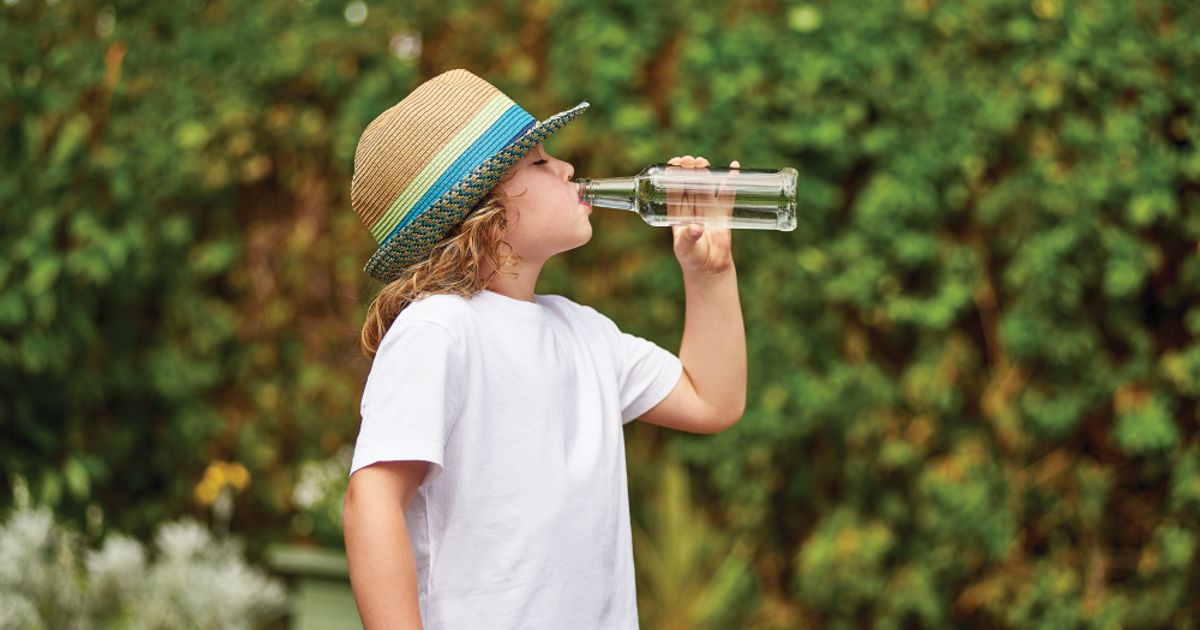
On World Health Day (7th April) we take a look at the health benefits offered by glass packaging at a time when consumers are increasingly concerned about the harm caused by other materials.
Arguably there’s never been a time in human history when people have been more aware of their health and of how their environment can affect their physical wellbeing.
From sugar and tobacco to air pollution and excessive UV radiation, we are more aware than ever of the health risks posed by what we consume and what we are exposed to.
The packaging we use for food and drinks is no different. Concerns about the impact of different packaging materials on our bodies and on the health of the planet have been growing steadily in recent years; scientists, celebrities and the media are focusing more and more on the issue of harmful packaging. Mainstream TV documentaries and viral TikToks are bringing this message directly to the consumer, making them think twice about the materials they purchase on a daily basis.
Glass Packaging – The Healthy Choice
As a result, there’s never been a better time for society to change direction and return to one of the world’s oldest and safest packaging materials. People have been storing food and drink in glass containers for thousands of years, so glass has a long track record as a safe, healthy and reliable packaging material. It’s inert, which means that nothing can leach into the food or drink; and it’s still the world’s only single-layer mainstream packaging material, which means it doesn’t require an additional layer to protect contents inside.
Glass is an entirely natural product (primarily made from silica sand, soda ash and limestone); it’s completely non-toxic and free from allergens, so it’s an excellent packaging material from both a health and an environmental point of view.
Glass is also the only packaging material exempt from REACH (Registration, Evaluation, Authorisation and Restriction of Chemicals) registration in Europe, and the only packaging material to achieve GRAS (Generally Recognised as Safe) classification from the American Food & Drug Administration. Both of these designations recognise glass as safe for direct contact with food and pharmaceutical products.
Why Consumers Choose Glass Packaging
In survey after survey, people say that they care about products being available in glass packaging. An independent survey of more than 10,000 consumers across 13 European countries, conducted in 2019 and 2020 by InSites Consulting (now called Human8), found that 57% of consumers in the UK still prefer glass because of its superior health and environmental credentials.[1]
The reasons for this continued popularity are that glass preserves the taste of the product, it does not taint food or beverages and does not leach harmful chemicals such as Bisphenol-A (BPA). And as glass is 100% endlessly recyclable with no loss of quality or integrity, a bottle can become another bottle, and a jar can become another jar.
Glass preserves flavour better than other materials and avoids stains and odours, making it a safer and cleaner long‑term option for food storage, and it generally keeps food fresher for longer because it forms a more effective barrier and doesn’t interact with the contents.
For generations, consumers have understood that glass containers are inert and non-toxic, so they’re 100% safe for storing food and drink. There’s a reason why many of us keep Kilner jars at home for storing food or making jam. Even at high temperatures, glass won’t warp or shed microplastics.
So, on World Health Day, if you’re worried about the impact of packaging on your health and the environment, look out for food and drinks in glass bottles and jars. After all, glass is the healthiest packaging choice out there.